Medical practices operate in a highly structured, compliance-driven environment where administrative accuracy, timely communication, and operational consistency are essential. Beyond clinical care, practices must manage patient intake, scheduling, documentation, billing coordination, and internal workflows on a daily basis.
A Medical Practice Virtual Assistant is a remote operations professional who supports non-clinical medical practice workflows, administrative systems, and execution required to keep healthcare practices running smoothly. These assistants are hired to manage repeatable operational work so physicians and in-office staff can focus on patient care rather than administrative burden.
Medical practice virtual assistants are typically hired in full-time or long-term roles where consistency, compliance awareness, and familiarity with internal practice workflows are critical.
As patient volume increases, many practices find that operational workload grows faster than their ability to manage it internally. Virtual assistants help absorb this workload, maintain process consistency, and reduce pressure on front-desk and administrative teams.
Why Medical Practices Hire Virtual Assistants
Medical practices face continuous operational demands that must be handled accurately and on time. Appointment coordination, patient communication, documentation handling, and follow-ups are all essential to maintaining care continuity and patient satisfaction.
Many practices hire virtual assistants because administrative work consumes valuable staff time and contributes to burnout. As practices grow, relying solely on in-office teams can lead to scheduling delays, missed follow-ups, and operational backlogs.
Virtual assistants provide dependable administrative support that helps practices stay organized, responsive, and efficient. They also allow practices to extend operational coverage without expanding physical office space or staffing costs at the same rate as patient growth.
Common Virtual Assistant Roles Used in Medical Practices
Medical practices typically rely on healthcare-specific virtual assistant roles aligned with administrative and operational needs.
Many practices work with a Medical Virtual Assistant to support patient intake, documentation handling, communication coordination, and general administrative workflows. For practices requiring detailed clinical documentation support, a Medical Scribe Virtual Assistant may assist with note preparation and record accuracy under provider guidance.
Depending on operational needs, practices may also use roles such as Medical Billing Virtual Assistant or Medical Receptionist Virtual Assistant to support billing coordination and front-desk style administrative execution.
How These Roles Support Medical Practice Operations
Virtual assistant roles support medical practice operations by maintaining structure across administrative workflows. These assistants help ensure patient records are organized, communications are handled consistently, and scheduling and billing-related processes remain accurate.
By taking ownership of execution-heavy tasks, virtual assistants reduce interruptions for providers and in-office staff. This leads to smoother daily operations, fewer administrative errors, and improved patient experience without compromising care standards or compliance requirements.
Virtual assistants operate within defined procedures and under practice guidelines, supporting efficiency while maintaining oversight and control.
How Medical Practices Scale with Virtual Assistants
Scaling a medical practice introduces administrative complexity before clinical complexity. More patients mean more scheduling, documentation, billing coordination, and follow-up requirements.
Virtual assistants allow practices to scale by separating administrative execution from clinical care. Routine operational tasks are delegated to dedicated roles, while providers retain control over treatment decisions and patient relationships. This model supports growth without increasing administrative strain or reducing quality of care.
As practices mature, virtual assistants often become integrated into standard operating procedures, providing continuity and stability as patient volume and service offerings expand.
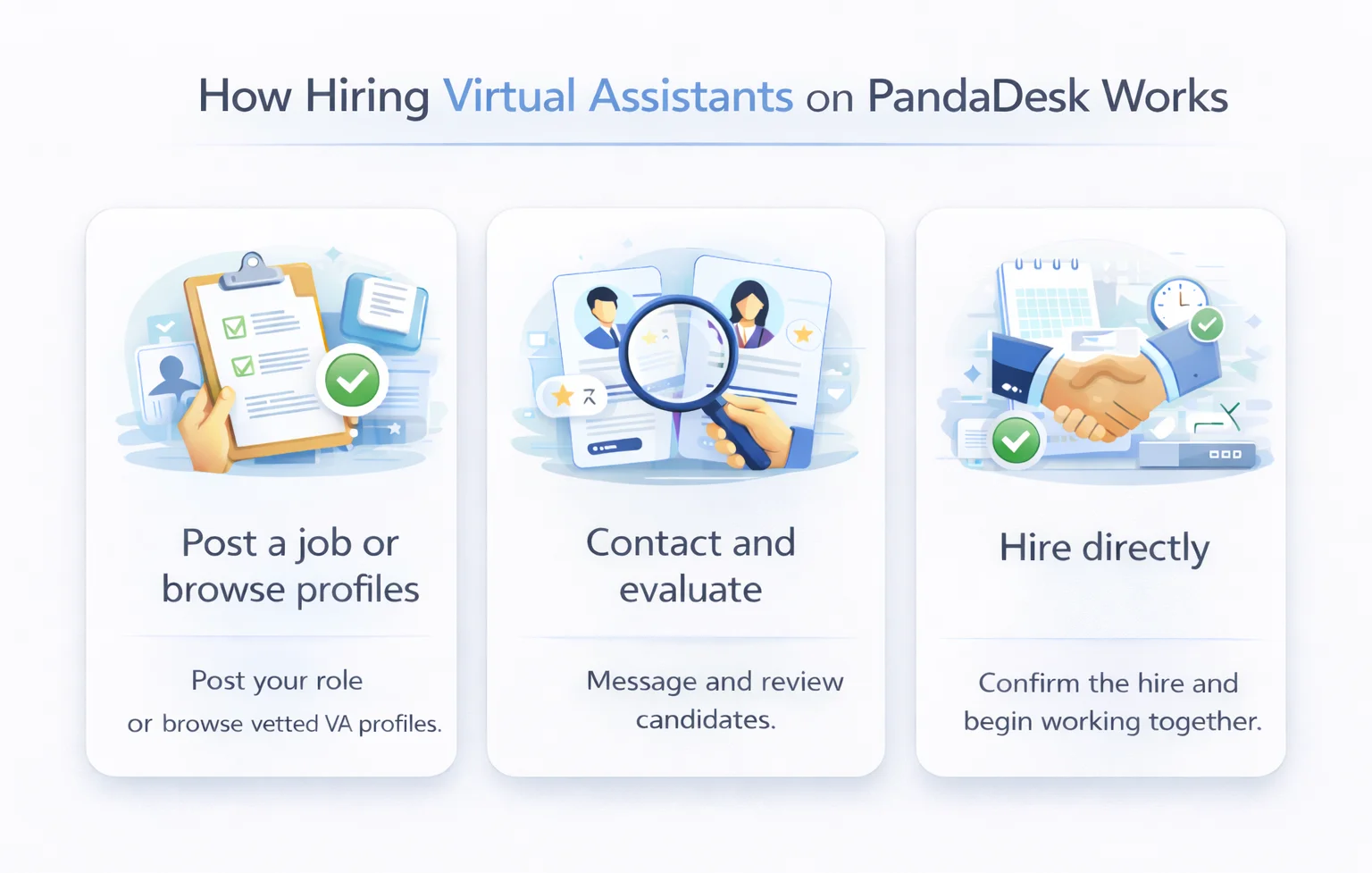
How to Hire Medical Virtual Assistant
Hiring on PandaDesk is simple and straightforward.
Explore Related Virtual Assistant Support
Learn how healthcare-focused virtual assistant roles support medical practice operations and administrative execution.