Dropshipping businesses operate in a fast-moving environment where order processing, supplier coordination, product data, and customer communication must run consistently. Although dropshipping removes the need for the store owner to manage physical inventory, it creates ongoing dependencies on suppliers, fulfillment systems, and accurate order information.
A Dropshipping Virtual Assistant is a remote professional who handles recurring operational tasks such as order processing, supplier follow-ups, product listing maintenance, shipment tracking, and customer support. By delegating these responsibilities, ecommerce businesses can maintain daily operations while founders focus on product selection, marketing, and growth.
As order volume increases, routine execution can become a bottleneck. Hiring a dropshipping VA helps businesses distribute operational responsibilities, establish repeatable workflows, and reduce dependence on the founder for everyday tasks.
What Does a Dropshipping Virtual Assistant Do?
A dropshipping virtual assistant supports the workflows required to operate an online store without holding its own inventory. Responsibilities depend on the store's platform, supplier arrangements, order volume, and existing team.
Common responsibilities include:
- Order processing: Reviewing new orders, following established processing procedures, and identifying orders that require attention.
- Supplier coordination: Following up on order status, product availability, shipping delays, and missing information.
- Product listing management: Uploading products, maintaining descriptions and variants, and checking product information for inconsistencies.
- Shipment tracking: Updating tracking information, monitoring delayed orders, and escalating fulfillment problems.
- Customer support: Answering routine questions about orders, delivery status, returns, and store policies.
- Store administration: Maintaining spreadsheets, updating operational records, and monitoring unresolved tasks.
Some businesses also hire specialists for product research, competitor research, or broader ecommerce administration. These responsibilities should be defined separately when they require analytical skills beyond routine store operations.
Why Dropshipping Businesses Hire Virtual Assistants
Dropshipping operations generate recurring work that must be handled accurately and on time. Orders need to be processed, supplier information must remain current, customers expect updates, and store data requires regular maintenance.
For small and medium-sized businesses, these responsibilities can consume a significant share of the owner's working time, particularly when several suppliers or sales channels are involved.
Reduce Order Processing Backlogs
Every new order creates a series of operational steps. Depending on the fulfillment setup, someone may need to verify order details, submit the order to a supplier, monitor its status, and update tracking information.
A dropshipping VA can manage these steps according to documented procedures and flag exceptions that require a decision. This helps the business maintain visibility over orders without requiring the owner to monitor every transaction personally.
Improve Supplier Coordination
Supplier delays, stock discrepancies, and missing tracking information can create additional work for store operators.
A VA can maintain supplier records, follow up on outstanding orders, request availability updates, and document recurring issues. Decisions involving supplier contracts, major purchasing commitments, or changes to commercial terms can remain with the owner or manager.
Maintain Consistent Customer Communication
Customers may contact a store about delayed shipments, tracking updates, missing items, or refund requests. A VA can handle routine inquiries using approved responses and escalation procedures.
Consistent communication helps customers receive accurate information and allows the owner to focus on cases requiring exceptions or higher-level decisions.
Free Up Time for Business Growth
Founders often need to divide their attention between operational tasks and higher-value activities such as product selection, advertising, supplier strategy, and conversion optimization.
Delegating repeatable work creates more room for those activities. The benefit depends on whether the delegated tasks are clearly defined and whether the time saved exceeds the effort required to train and manage the VA.
Common Virtual Assistant Roles Used in Dropshipping Businesses
The right type of virtual assistant depends on the store platform and the work that needs to be delegated.
Many operators hire a Shopify Virtual Assistant to support storefront administration, order workflows, product listings, and customer communication for Shopify-based dropshipping stores.
Businesses running their stores on WooCommerce may benefit from a WooCommerce Virtual Assistant who understands WordPress-based store administration, product management, and order handling.
For businesses with broader online retail operations, an eCommerce Virtual Assistant may be a better fit when the role covers multiple store functions rather than a single platform.
The job title matters less than the responsibilities. When hiring, specify the systems the candidate will use, the tasks they will own, and the level of independence expected.
How a Dropshipping VA Supports Daily Store Operations
A dropshipping virtual assistant supports daily workflows by handling routine tasks and flagging issues that require the owner's attention.
Order Processing
- VA responsibilities: Review orders, follow processing procedures, and flag exceptions.
- Owner involvement: Unusual orders, policy exceptions, and decisions requiring authorization.
Supplier Coordination
- VA responsibilities: Request updates, follow up on delays, and maintain supplier records.
- Owner involvement: Supplier disputes, contract changes, and commercial decisions.
Product Management
- VA responsibilities: Update listings, check product information, and maintain catalog records.
- Owner involvement: Pricing strategy, product selection, and major merchandising decisions.
Shipment Tracking
- VA responsibilities: Monitor tracking information, identify overdue shipments, and follow up on delivery issues.
- Owner involvement: Significant fulfillment disputes and exceptional customer cases.
Customer Support
- VA responsibilities: Answer routine inquiries and follow approved return, refund, and delivery policies.
- Owner involvement: Unusual refund requests, escalated complaints, and policy exceptions.
Operational Reporting
- VA responsibilities: Maintain task trackers, record unresolved issues, and prepare regular status updates.
- Owner involvement: Decisions about priorities, recurring problems, and changes to operating procedures.
The goal is to give the VA clear ownership of recurring work while keeping business-critical decisions with the appropriate person.
How to Scale Dropshipping Operations with Virtual Assistants
Hiring a VA is most effective when it is part of a repeatable operating process rather than an informal transfer of tasks.
1. Identify the Operational Bottleneck
Start by reviewing which recurring tasks consume the most time or create the most problems. Examples include processing orders, answering customer inquiries, updating product listings, or following up with suppliers.
Prioritize tasks that occur frequently, have clear completion criteria, and can be delegated without transferring unnecessary decision-making authority.
2. Document Standard Operating Procedures
Create straightforward instructions for recurring work. An order-processing procedure, for example, should explain how to review an order, where to submit it, how to record its status, and what to do when required information is missing.
Documented procedures reduce ambiguity and make it easier to train a new hire or maintain consistency as the team grows.
3. Define Access and Approval Limits
Give the VA access only to the systems and information required for the role. Use individual accounts and appropriate permissions wherever possible.
Define which actions can be performed independently and which require approval. Refunds above a specified amount, supplier changes, pricing changes, and unusual order exceptions may require additional authorization.
4. Establish Clear Performance Measures
Choose measures that reflect the VA's actual responsibilities. Depending on the role, these may include order-processing accuracy, overdue follow-ups, customer response time, listing errors, and the number of unresolved operational issues.
Review performance alongside order volume, supplier responsiveness, and the complexity of the work. Not every delay or error is within the VA's control.
5. Expand Responsibilities as Workflows Mature
Once the initial responsibilities are running reliably, the VA may take ownership of additional recurring tasks. This could include supplier reporting, catalog audits, more complex customer support, or coordination across multiple sales channels.
Expand the role according to demonstrated ability and documented procedures rather than assuming that every VA should manage every aspect of a dropshipping business.
How to Hire the Right Dropshipping Virtual Assistant
The most suitable candidate is someone whose experience matches your store's actual workflows.
Look for relevant platform experience. If your store runs on Shopify or WooCommerce, prioritize candidates who can explain the tasks they have performed on that platform.
Evaluate operational accuracy. Order processing, product data, and customer communication require attention to detail. Ask candidates how they identify discrepancies and handle incomplete information.
Assess written communication. Supplier follow-ups and customer support require clear, professional communication and the ability to follow established policies.
Use a practical assessment. A short exercise using fictional order records can test whether a candidate identifies missing tracking information, delayed orders, and supplier discrepancies. Ask them to explain which actions they would take and which issues they would escalate.
Define the scope before hiring. Specify working hours, required experience, software, responsibilities, reporting expectations, and salary range. This makes it easier to compare candidates against the same requirements.
For the best results, begin with a manageable set of responsibilities, provide clear procedures, and review performance regularly during onboarding.
How Much Does a Dropshipping Virtual Assistant Cost?
The cost of hiring a dropshipping VA depends on experience, working hours, technical requirements, communication skills, and the complexity of the role.
Someone handling routine product updates and order tracking has different responsibilities from a specialist managing multiple storefronts, complex supplier workflows, or product research.
When comparing candidates, consider the full cost of the arrangement, including recruitment, onboarding, supervision, and any required software. Compare salary expectations against the responsibilities and experience required rather than relying on a single generic rate.
PandaDesk allows employers to explore remote professionals and compare their skills and stated salary expectations when evaluating potential hires.
How to Hire a Dropshipping Virtual Assistant on PandaDesk
Hiring through PandaDesk lets businesses explore remote professionals directly and identify candidates whose experience matches their operational needs.
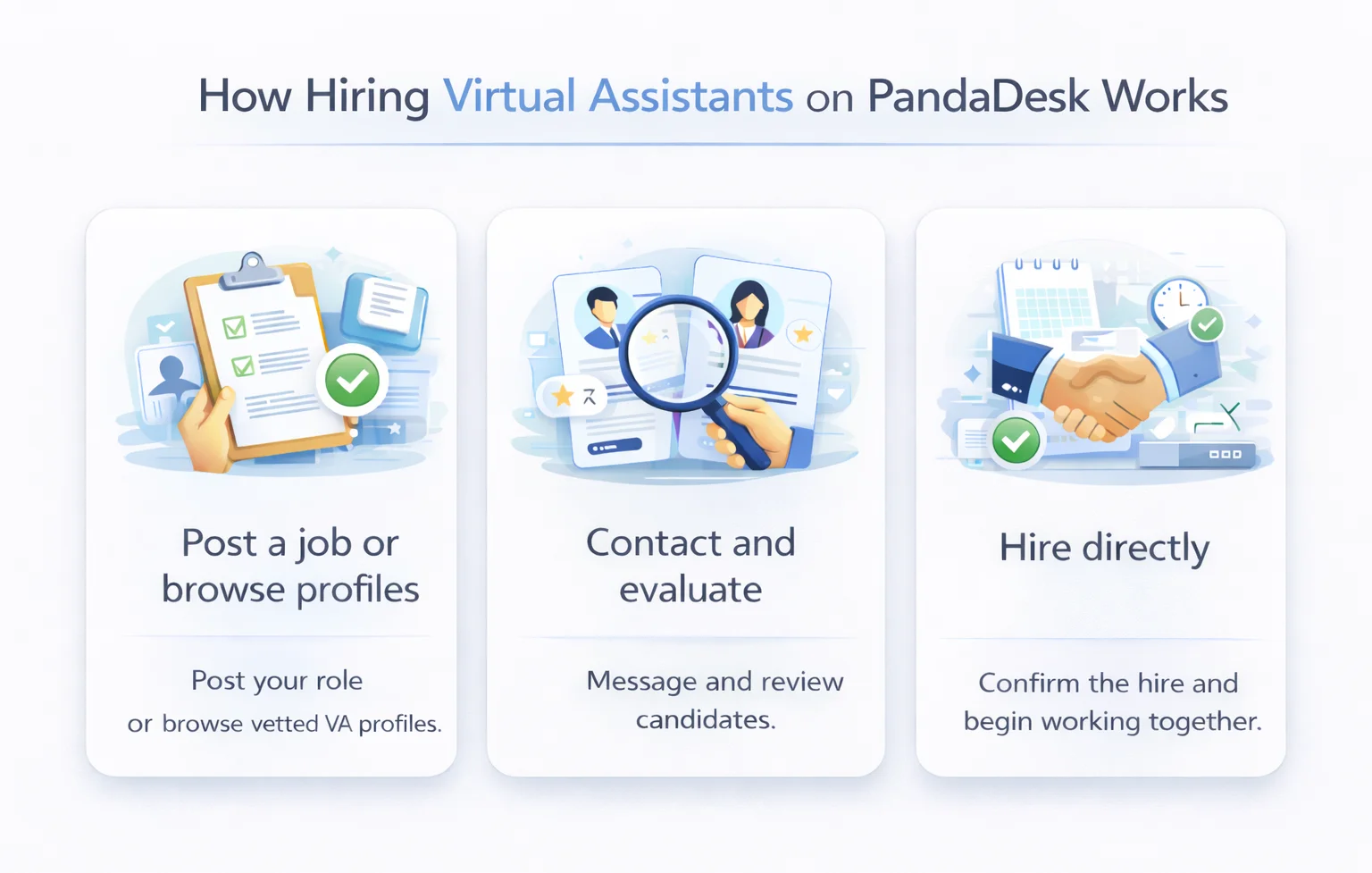
Start by defining the responsibilities you need covered, such as order processing, supplier communication, product management, or customer support. Then evaluate candidates based on their relevant experience, platform knowledge, communication skills, and salary expectations.
Before the VA starts, prepare the necessary procedures, account permissions, approval limits, and performance expectations. Clear responsibilities help the new hire become productive without requiring the owner to supervise every routine action.
Frequently Asked Questions
What tasks can a dropshipping virtual assistant handle?
A dropshipping VA can handle order processing, supplier follow-ups, shipment tracking, product listing maintenance, customer support, and operational reporting. Responsibilities depend on the store's workflow and the candidate's experience.
Can a virtual assistant manage a Shopify dropshipping store?
Yes. A VA with relevant Shopify experience can support order management, product listings, store administration, and customer communication. Access and responsibilities should be defined according to the role.
Should I hire a general virtual assistant or a dropshipping specialist?
A general VA may be suitable for basic administrative work. A dropshipping specialist is more appropriate when the role requires experience with supplier coordination, fulfillment workflows, ecommerce platforms, and order exceptions.
Can a dropshipping VA find suppliers and research products?
Some VAs have experience with product research, competitor analysis, and supplier sourcing. These responsibilities require different skills from routine order administration, so specify them in the job description and assess candidates accordingly.
How do I manage a dropshipping VA remotely?
Use documented procedures, a shared task tracker, clear approval limits, secure account permissions, and regular performance reviews. Establish how the VA should report delays, errors, and issues requiring a decision.
Is a full-time dropshipping virtual assistant necessary?
Not always. The appropriate working arrangement depends on order volume, the number of recurring tasks, required coverage, and the time needed to manage the workload. Estimate the actual hours required before deciding whether to hire full-time or part-time.
Explore Related Virtual Assistant Support
Learn how platform-focused virtual assistant roles support dropshipping operations and execution at scale.