Insurance companies operate in a highly process-driven environment where response speed, documentation accuracy, customer communication, and operational consistency directly impact retention and revenue. Unlike many service businesses, insurance operations involve continuous administrative work across quoting, renewals, claims coordination, policy servicing, and customer support workflows.
An insurance virtual assistant is a remote operations professional who supports the administrative, communication, and coordination workflows that keep insurance agencies and insurance companies running efficiently. These assistants handle repeatable operational tasks so agents, producers, account managers, and internal teams can focus on sales, underwriting decisions, and client relationships.
As insurance companies grow, operational workload increases quickly. More policies, more renewals, more customer inquiries, and more claims activity create coordination complexity that can overwhelm internal teams. Virtual assistants help absorb this workload, maintain operational consistency, and ensure that critical workflows continue running without delays.
Why Insurance Companies Hire Virtual Assistants
Insurance businesses manage large volumes of repetitive but essential operational work. Leads must be followed up quickly, policy updates need accurate processing, claims communication must remain organized, and customer support requests require timely responses.
Many companies hire insurance virtual assistants because operational workload scales faster than internal staffing. Delayed responses, missed renewals, disorganized records, and inconsistent communication can directly affect retention and revenue.
Virtual assistants provide execution support by handling routine administrative and communication tasks consistently. This allows insurance companies to:
- Respond to policy inquiries and leads faster
- Reduce administrative workload on licensed staff
- Maintain consistent communication with policyholders
- Improve renewal follow-up and retention workflows
- Keep CRM and policy management systems organized
- Scale operations without increasing fixed overhead
Cost of Hiring an Insurance Virtual Assistant
Hiring locally for insurance administrative support increases overhead through salary, taxes, benefits, equipment, and office costs.
With direct hiring from global talent markets, insurance virtual assistants typically cost between $4 to $9 per hour, depending on experience, communication ability, and software proficiency.
This creates a flexible cost structure:
- No payroll taxes or employee benefits
- No office or equipment expenses
- Pay only for productive working time
- Flexible scaling based on workload
This model is especially effective for insurance companies with fluctuating workload during renewal cycles, claims spikes, or seasonal demand changes.
Operational ROI for Insurance Companies
Insurance performance depends on speed, consistency, and retention.
Virtual assistants improve operational outcomes by:
- Increasing lead response speed
- Reducing missed customer communication
- Improving policy renewal follow-up
- Keeping CRM and policy data accurate
- Supporting claims coordination workflows
- Reducing administrative backlog
Since insurance revenue is recurring, even small improvements in retention and conversion rates can compound into significant long-term value.
24/7 Customer Communication Support
Insurance customers often require assistance outside standard business hours due to emergencies, accidents, or urgent policy issues.
Virtual assistants help maintain continuous communication coverage by:
- Responding to inbound calls and inquiries after hours
- Following up on web form submissions and missed calls
- Scheduling appointments for agents and account managers
- Managing email and voicemail workflows
- Routing urgent requests to appropriate teams
This ensures no inbound opportunity is lost due to delayed response times.
Bilingual Support for Insurance Operations
Insurance agencies frequently serve multilingual customer bases.
Virtual assistants can support operations by:
- Handling customer communication in multiple languages
- Reducing misunderstandings during policy servicing
- Improving customer experience and retention
- Supporting claims communication workflows
- Expanding accessibility across customer segments
What an Insurance Virtual Assistant Can Handle
Insurance virtual assistants manage administrative and operational workflows that do not require licensing or in-person presence.
Lead Management & Sales Support
- Responding to inbound quote requests
- Following up with unconverted leads
- Scheduling appointments for agents and producers
- Updating CRM systems
- Managing outbound follow-ups
- Organizing pipeline and renewal opportunities
Policy Administration & Servicing
- Processing policy updates and service requests
- Managing documentation and digital records
- Sending renewal reminders
- Tracking cancellations and pending items
- Supporting certificate and endorsement workflows
Claims Coordination Support
- Organizing claims documentation
- Uploading files into insurance systems
- Following up on missing information
- Communicating claim status updates
- Tracking claims progress
Customer Support & Communication
- Handling inbound inquiries
- Managing phone, email, and chat workflows
- Sending appointment reminders
- Escalating urgent requests
- Supporting retention campaigns
CRM & Administrative Operations
- Updating customer and policy records
- Maintaining CRM data accuracy
- Managing spreadsheets and reports
- Coordinating calendars
- Supporting document workflows
Insurance Software and Systems
Virtual assistants commonly work inside existing insurance systems, including:
- Applied Epic
- AMS360
- EZLynx
- HawkSoft
- Salesforce
- HubSpot
- Zoho CRM
- RingCentral
- Google Workspace
- Microsoft 365
Integration into existing systems allows fast onboarding without operational restructuring.
How Virtual Assistants Fit Into Insurance Operations
Insurance companies rely heavily on structured communication, documentation, and coordination workflows.
Virtual assistants integrate into existing systems to support execution-heavy operations, including CRM management, customer communication, and policy servicing.
For companies focused on high-volume inbound communication, support models similar to a customer support virtual assistant are often directly applicable.
For agencies managing structured back-office workflows, support models similar to a billing and insurance virtual assistant may overlap with documentation and administrative coordination needs.
Virtual assistants help maintain operational consistency by:
- Reducing internal workload
- Improving response times
- Preventing communication gaps
- Keeping systems organized
- Supporting scalable growth
Who This Is For
This model is designed for insurance companies and agencies that:
- Handle consistent inbound policy inquiries
- Manage ongoing renewals and servicing workloads
- Experience administrative bottlenecks
- Need faster customer response times
- Want to scale operations without increasing fixed overhead
Who This Is Not For
This is not suited for:
- Very early-stage agencies without operational volume
- Teams without defined workflows or systems
- Companies expecting licensed insurance work
- Businesses without structured communication processes
How Insurance Companies Scale with Virtual Assistants
As insurance operations grow, administrative workload increases faster than internal capacity.
Virtual assistants allow companies to scale by:
- Separating execution from licensed work
- Creating repeatable operational workflows
- Expanding capacity without fixed staffing costs
- Maintaining service consistency during growth
- Improving responsiveness across communication channels
Over time, virtual assistants become part of core insurance operations, supporting stability, efficiency, and growth.
How to Hire an Insurance Virtual Assistant
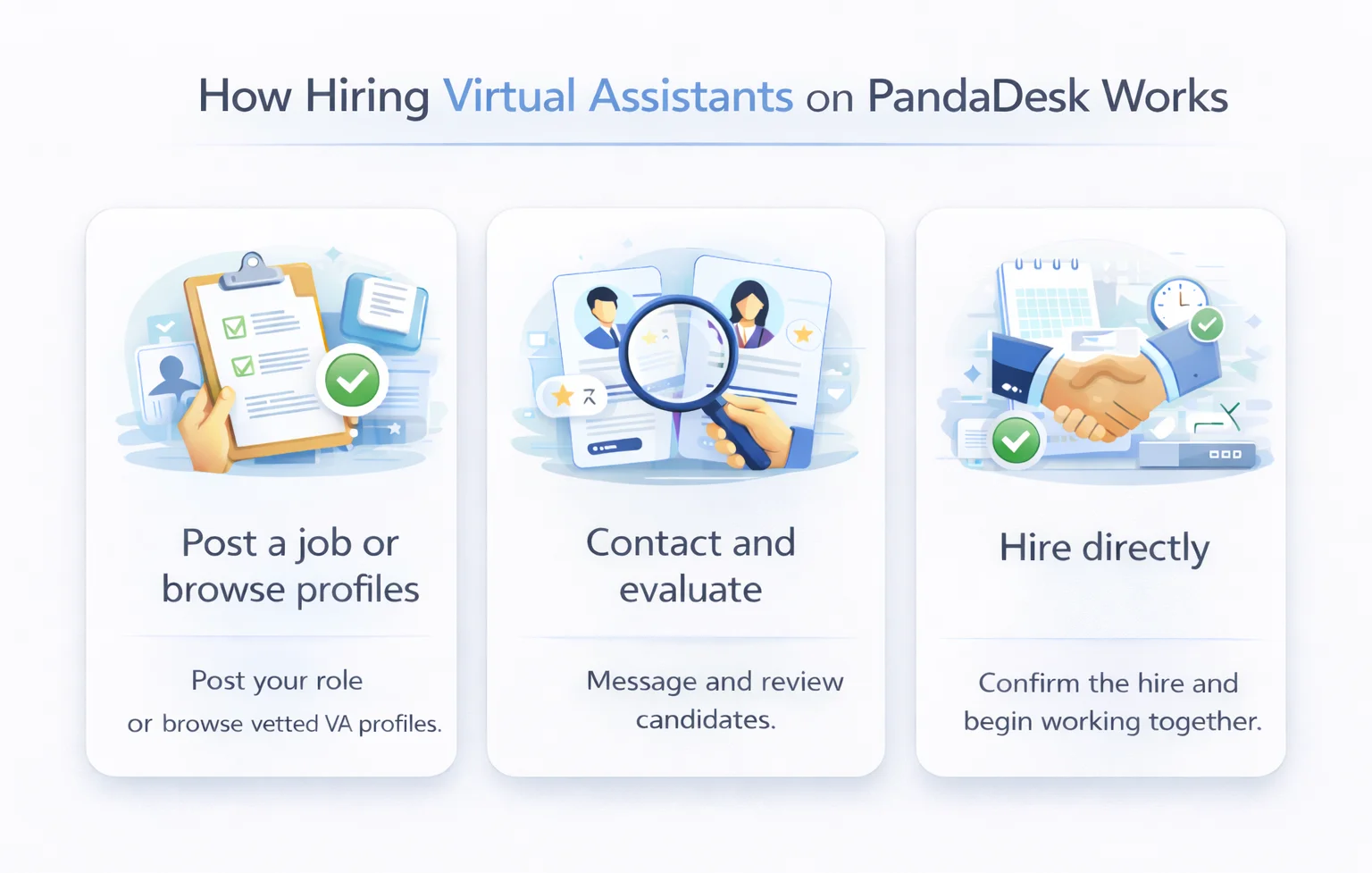
Hiring on PandaDesk connects insurance companies with virtual assistants experienced in administrative operations, CRM management, customer communication, and insurance workflows.
Explore Related Virtual Assistant Support
Learn how virtual assistants support insurance operations, customer communication, and administrative workflows.